

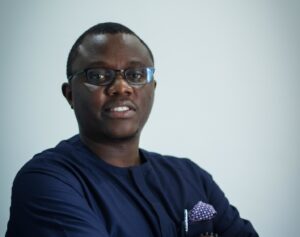
From building websites as a young self-taught developer to founding some of Africa’s most influential technology-driven companies, Onyeka Akumah has consistently chosen to solve hard, everyday problems at scale. As the founder of FarmCrowdy, Rent Small Small (SmallSmall Technology) and TRIPS, Akumah has applied technology to sectors many considered too complex or risky, agriculture, housing, and transportation, creating solutions that touch millions of lives across Africa and beyond.
In this interview, he reflects on his early influences, hard-won lessons, failures and breakthroughs, his approach to building sustainable African businesses, and the global ambition now driving TRIPS as it expands beyond the continent.
- Davido Set To Ignite AFCON 2025 Opening Ceremony In Rabat
- NUJ FCT Mourns Passing of Member, Sunday Olatuyi, Demands Prosecution of Reckless Driver
Q: You studied Applied Information Technology in India and others not mentioned, graduating top of your class. How did that foundation shape your entrepreneurial mindset when you returned to Nigeria, sir?
A: First, a small correction: most of the program was part-time and done from Nigeria; I didn’t spend years in India. Going through school was mainly academic, just to do well and get the degree. The real entrepreneurial part happened when I taught myself web design, started building websites for people, and began generating revenue from it. By the time I graduated, I had built about 15 websites for different individuals and organizations and even set up my first web design company called Anozim. But honestly, the entrepreneurial mindset started way before university. My mom made me raise and sell day-old chicks. My dad gave me books like The Richest Man in Babylon and Rich Dad Poor Dad when I was 15. Even before entering school, I was already trying to set up a business centre. I had learned that I could create value for people that they would pay for, and I could use that money to fund whatever I wanted. So university just amplified the skills. The real foundation was much earlier.
Q: Looking back at your experiences and influences, what pushed you toward solving Africa’s challenges through technology?
A: In 2009 I went through a program that exposed me to the major challenges Nigeria (and Africa) was facing where technology could solve real problems. I identified three sectors people interact with every single day:
Agriculture – people eat daily
Transportation – people commute daily
Real estate/housing – people need shelter
I decided those were the three areas I would focus on. I then worked at Deloitte, British Council, GTBank, helped launch Jumia and Travelstart, and supported several other startups. By 2016 I felt it was time to stop helping others build and start building my own companies in those exact three sectors. That’s the entire backstory of why I build in agriculture (FarmCrowdy), housing (Rent Small Small/SmallSmall Technology), and transportation/mobility (TRIPS).
Q: You have built all of this. What ties these ventures together? What ties these three key focus areas in your career together?
A: Simple: impact on people’s everyday lives. Everything is connected by:
Making the daily lives of Africans better
Applying technology to sectors others avoided or thought were impossible
Creating sustainable growth and jobs on the continent (over 500 people have worked across my companies)
Breaking brand-new ground — monthly rent payments in 2017 (people thought it was impossible), digital agriculture when almost nobody was doing it, seamless and safe daily commuting without depending on the old danfo system
Today many of these things look normal and commonplace, but we had to be the ones to break that ground first.
Q: FarmCrowdy was a pioneer in digital agriculture in Nigeria. What was the biggest lesson you carried from that journey into subsequent ventures?
A: FarmCrowdy was deliberately my first and toughest bet because I knew agriculture would be the hardest sector to crack with technology. Key lessons:
If you have a big dream and assemble the right people (people who could each be CEOs of their own companies), you can achieve almost anything.
Cracking a traditional sector requires massive education, resilience, and perseverance — sometimes you’re completely alone.
In Africa, design your business to generate revenue from day one so it becomes self-sustaining instead of living forever on investor money.
Start small, hedge every risk, learn the entire value chain end-to-end before you scale fast.
Surround yourself with people smarter than you in their specific areas and rally them around the vision.
All these lessons were battle-tested at FarmCrowdy and then deliberately applied (and improved) in every company that followed.
Q: TRIPS has grown from a Lagos bus-hailing service into a multinational corporate mobility platform. What has been the most challenging aspect of scaling across borders?
A: We refused to start from zero in new countries. We used an acquire-and-transform strategy:
Acquired StarBus → rebranded and turned the team into TRIPS Ghana
Acquired UgaBus → became TRIPS Uganda
Same model in Kenya
That gave us instant teams, customers, revenue, and local knowledge from day one. Canada was different, it had to be founder-led, sleeves rolled up, starting almost from scratch because the market is completely different. The strategy came from watching aggressive organic scaling kill sustainability at places like Konga and Jumia. We recently decided to slow down new African countries and double-down on North America while keeping our African operations strong.
Q: Through mentoring and community building you have mentored over 200 founders and built a community of nearly 500. What common struggles do African entrepreneurs face today and how do you guide them — especially the young ones?
A: (Small correction: the 200+ mentored are specifically Techstars founders; the community I run is now close to 500 founders, investors, and executives across 23 countries.)
Three biggest struggles I see repeatedly:
Finding and keeping the right co-founders and team, made much harder by brain drain and global companies poaching talent with huge war chests.
Funding both seed capital and growth capital. Access still heavily favours people with certain pedigrees, networks, or alumni groups. My constant advice: generate revenue early so you’re never 100% dependent on investors, and deliberately build visibility and networks.
Regulatory inconsistency one day your business is fully legal and thriving, the next day a policy change wipes you out.
Those are the three structural issues almost every African founder battles.
Q: You are also an author of “Zero to Forty: Don’t Stop Building.” What is the core message you want young founders to take away from this book?
A: It’s my autobiography in three phases:
0–20: formation years
20–30: working for other people (but deliberately learning everything I could outside my job description because I knew I would build my own companies one day)
30–40: building my own companies
I was brutally honest, especially Chapter 8 on “entrepreneurial pain” where I documented every major failure and the exact lessons from each. Core message: how to become a resilient entrepreneur in Africa — how to keep building no matter what, how to fail fast and learn faster, how to assemble the right team, and how to turn both successes and massive setbacks into fuel. I wanted readers to shortcut years of pain by learning from everything I went through.

Q: Beyond business growth, you wear many hats. Of everything you’ve done — FarmCrowdy, TRIPS, Rent Small Small, mentoring, the book, etc. — what impact are you most proud of?
A: I don’t rank the businesses. What I’m most grateful for is that God gave me the grace and courage to take a chance on myself, to dream big and actually go after it. Many people dream but never act, so they never know if it would have worked. I acted. Sometimes it became massive success, sometimes it failed, but I always tried, learned, and kept building. Seeing the businesses touch millions of lives, seeing former team members become successful entrepreneurs themselves, seeing entire industries shift perspective, all of that is amazing. But the thing that fills me with the deepest joy is simply that I was able to dream and go after those dreams. “Proud” isn’t really in my vocabulary, humility is my number-one core value, so I give all glory to God and remain grateful for the privilege to even try.
Q: Finally, what’s next for TRIPS?
A: We are building a full-blown global corporate travel and mobility platform. Today we move employees and busy executives seamlessly. Tomorrow we will become a major travel company covering dozens of countries across Africa, North America, Middle East, and Europe, first serving corporates and executives perfectly, then extending to individual travellers. The ultimate vision: anywhere in the world you need to move, you will move better with TRIPS. Every partnership, every move you see us make right now is aligned with that global ambition.